
Virginia Contractor License Monetary Limits (2026): Class A, B & C
If you're searching for the current Virginia contractor license monetary limits, you've probably noticed that different websites list different numbers. That's because many websites still reference the previous monetary thresholds.
Virginia's current contractor license monetary limits, effective September 1, 2025, are:
Class C: More than $1,000 but less than $30,000 per project, and less than $250,000 in total contracts during a 12-month period.
Class B: $30,000 to less than $150,000 per project, or $250,000 to less than $1,000,000 in total contracts during a 12-month period.
Class A: $150,000 or more per project, or $1,000,000 or more in total contracts during a 12-month period.
Virginia contractor license classes are based on two monetary thresholds: the value of a single contract or project and the total value of work performed during a 12-month period. Exceeding either threshold can affect which license class is required.
Why Do Some Websites Show Different Monetary Limits?
Virginia updated the contractor license monetary thresholds, but many websites haven't updated their content. As a result, you may still see outdated numbers in search results or on older contractor licensing websites.
Before making licensing decisions, it's always a good idea to verify that the information you're reading reflects the current Virginia regulations.
How Do Virginia Contractor License Monetary Limits Work?
Virginia looks at both of the following:
1. The Value of a Single Contract
This is the total value of one project.
For example:
A contractor with a Class C license cannot contract for a project worth $30,000 or more.
Projects between $30,000 and less than $150,000 generally require a Class B license.
Projects of $150,000 or more require a Class A license.
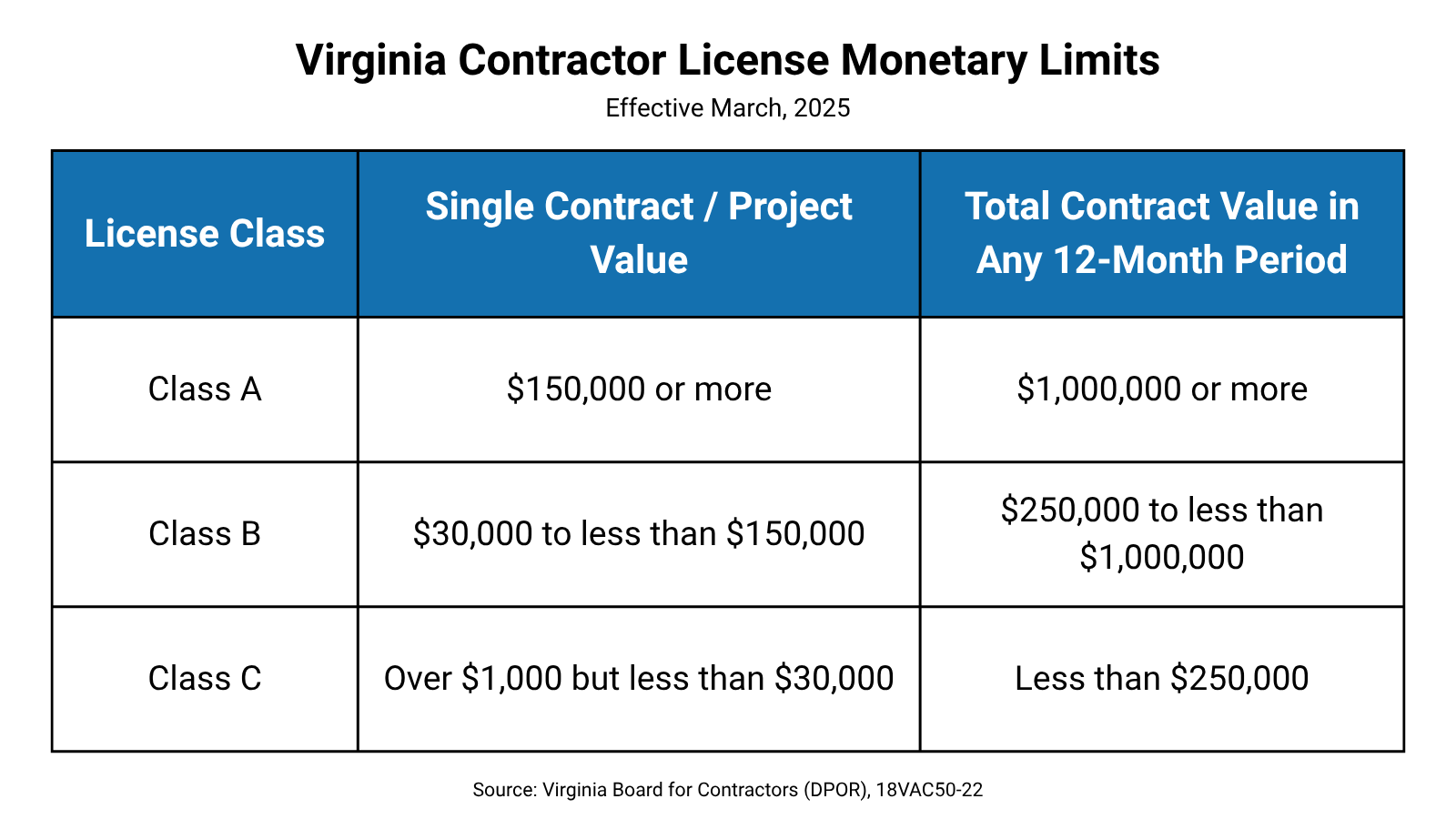
Virginia Class A, Class B, and Class C contractor license monetary limits based on individual project value and total contract value during a 12-month period.
2. Your Total Work During a 12-Month Period
Virginia also limits the total value of all contracts you perform over a 12-month period. You don't have to take on one large project to exceed your license class. Several smaller projects can push your total contract value into the next class during a 12-month period.
For example, even if every project is under $30,000, a Class C contractor cannot exceed $250,000 in total work during a 12-month period.
Both the individual contract value and the annual total matter when determining whether your license class is appropriate.
Which Virginia Contractor License Class Do I Need?
In general:
Class C is intended for smaller projects and contractors with lower annual volume.
Class B is designed for contractors performing medium-sized projects or higher annual contract volume.
Class A is required for larger projects and contractors performing the highest volume of work.
Choosing the correct license class depends on both the size of your projects and your expected annual business volume. Monetary limits are only one difference between the three license classes. See Virginia Contractor License Classes Explained: Class A, B & C for a full comparison of the requirements for each class.
Need Help Choosing the Right License Class?
Choosing the wrong contractor license class can delay your application or limit the work you're legally allowed to perform.
Not sure whether your business needs a Class A, Class B, or Class C Virginia contractor license? Licensing Path can help you understand which requirements apply to your situation and what steps come next. Send us your questions.
Sources: