How to Get a Virginia Contractor License: Step-by-Step Guide
This step-by-step guide explains how to get a Virginia contractor license, from choosing your license class and specialty to completing the required education and exams and submitting your application to the Virginia Board for Contractors.
Requirements vary depending on your license class (A, B, or C) and the classification or specialty you choose. Use this guide as a roadmap and verify current requirements with the Virginia Board for Contractors before applying.
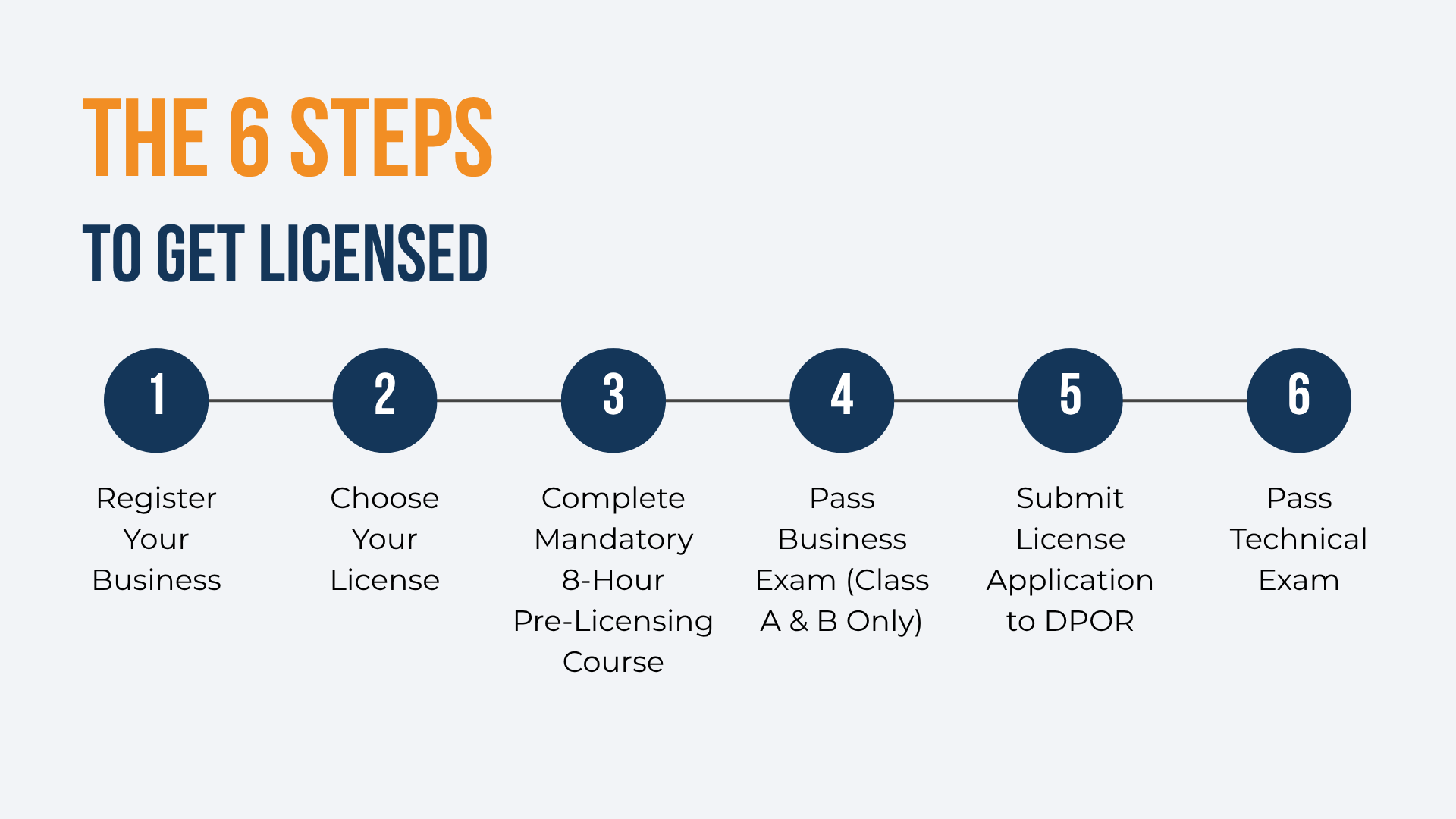
The six major steps to getting a Virginia contractor license. While requirements vary depending on your license class and specialty, this roadmap provides a high-level overview of the licensing process.
Step 1: Register Your Business
Before applying for a contractor license, you'll need a legal business entity.
Many contractors choose an LLC, but sole proprietorships, corporations, and partnerships may also qualify depending on your business structure.
You may also need:
Business registration through the Virginia State Corporation Commission (if applicable)
A federal Employer Identification Number (EIN), if required
A business bank account
Local business licenses, if applicable
Step 2: Choose Your License Class & Specialty
Next, determine which contractor license best fits the work you plan to perform.
You'll choose:
Your license class (A, B, or C)
Your contractor specialty (such as Residential Building Contractor, Commercial Building Contractor, Home Improvement Contracting, Roofing, Electrical, Plumbing, etc.)
Choosing the correct license is important because it determines the experience requirements, examination requirements, and the size of projects you're legally permitted to perform.
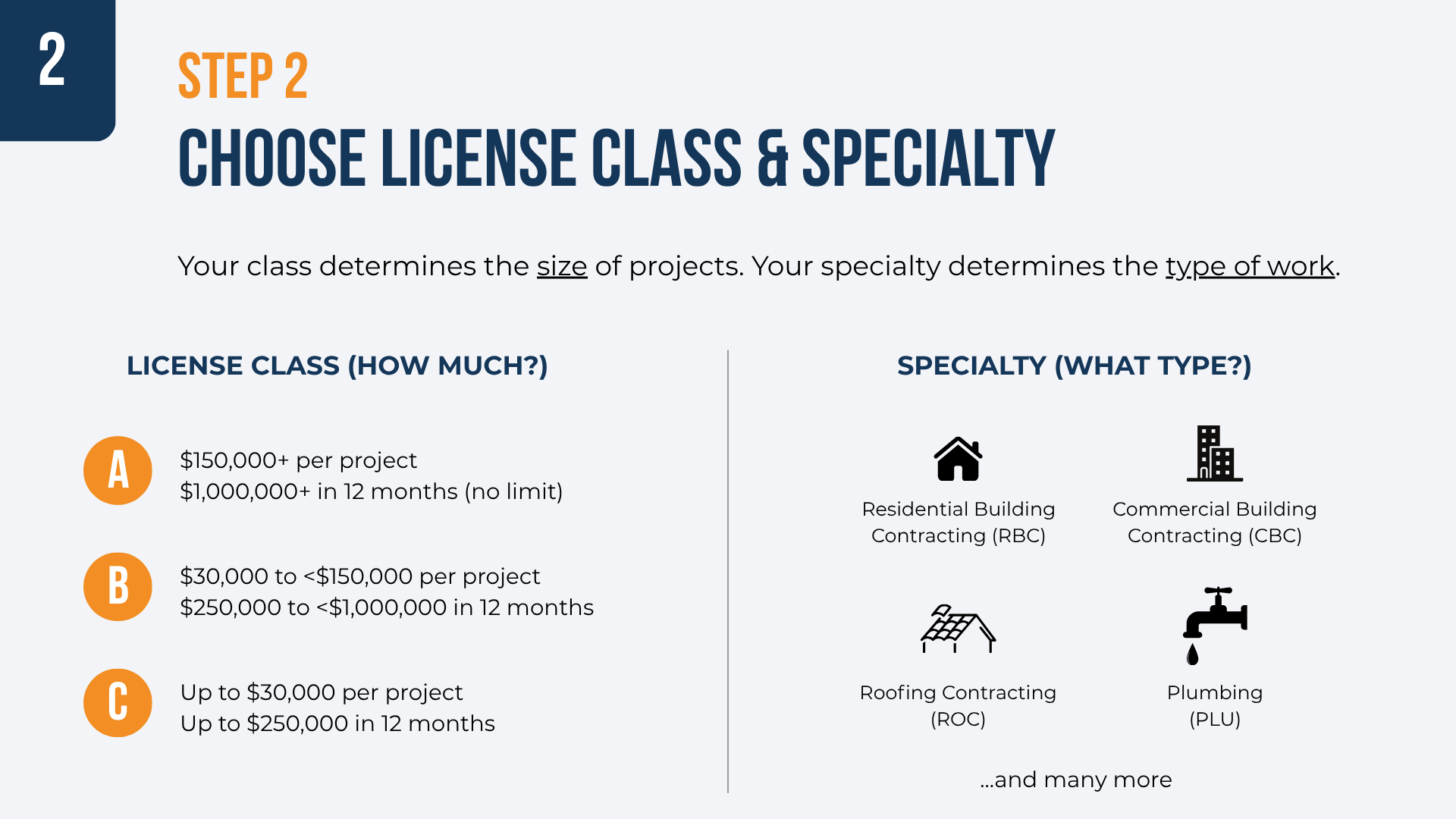
Virginia contractor license classes determine the maximum contract value and annual project limits your business may perform. Choosing the correct license class is one of the first steps in the licensing process.
Step 3: Complete the Mandatory 8-Hour Pre-License Course
All businesses applying for a new Virginia contractor license must satisfy the 8-hour pre-license education requirement.
For Class A and Class B licenses, the course must be completed by a member of Responsible Management or the Designated Employee. For Class C licenses, it must be completed by a member of Responsible Management.
The pre-license course is a basic business course covering Virginia contractor laws, regulations, and requirements. It is separate from the Class A and Class B Business examinations.
Step 4: Pass the Required Business Exam (Class A & B)
Class A and Class B applicants must designate a Designated Employee (DE) who has passed the required contractor business examination.
Class A: Virginia, General, and Advanced portions
Class B: Virginia and General portions
Class C: No Designated Employee or business examination is required.
The Designated Employee must be a member of Responsible Management or a bona fide full-time employee of the business.
Class C applicants do not take the Business and Law Exam.
Step 5: Submit Your License Application to DPOR
Once you've completed the required education, passed the Business and Law Exam (if required), and gathered your documentation, you're ready to submit your application to the Virginia Department of Professional and Occupational Regulation (DPOR).
Your application typically includes:
Business information
License class and specialty
Experience Verification Form
Pre-license course certificate
Examination information
Required application fee
DPOR reviews the application before authorizing any required technical examinations.
Step 6: Pass Your Technical Examination
Unlike the Class A and Class B business examinations, technical examinations for Qualified Individuals generally require pre-approval from the Virginia Board for Contractors. After DPOR reviews the applicable experience and qualification information and approves the QI to test, the individual can register for the required technical examination.
Once the Qualified Individual successfully completes the required examination and all other licensing requirements have been met, DPOR can issue the contractor license.
What's Next?
Understanding the process before you apply can help you avoid common delays, such as choosing the wrong license class, listing an unqualified QI, missing an examination requirement, or submitting incomplete documentation.
Explore the Licensing Path resources for more detailed guidance on license classes, experience requirements, monetary limits, exams, and the Virginia contractor application process.
If you have a question about your specific licensing path, contact Licensing Path.
Last Updated: August 2026