Virginia Residential Plumber License Requirements
Virginia introduced the Residential Plumber license as a new option for plumbers who want to work in residential structures.
Available beginning April 1, 2025, the license requires less experience and vocational training than Virginia's Journeyman Plumber license and can also provide a pathway toward becoming a Journeyman later. Most importantly, the Residential Plumber license does not permit commercial plumbing work.
If you're just beginning to research plumbing licensing, start with How to Get a Virginia Plumbing License to understand the difference between individual plumber licensing and contractor business licensing.
What Is a Virginia Residential Plumber License?
The Residential Plumber license is an individual tradesman license issued through Virginia's Board for Contractors.
It is separate from the standard Journeyman and Master Plumbing licenses and has its own Residential Tradesman Exam & License Application.
On the application, DPOR identifies the license as Residential Plumber Tradesman (PLB). The important distinction is that this license is limited to residential plumbing work. DPOR specifically states that commercial work is not permitted under the Residential Plumbing license.
Who Is the Residential Plumber License For?
The Residential Plumber license provides another path for someone who wants to become individually licensed in plumbing but does not yet meet the higher experience and training requirements for a Journeyman license.
It may be a good option if you:
work specifically in residential plumbing;
have several years of practical plumbing experience but don't yet qualify for Journeyman licensure; or
want to use the Residential Plumber license as a step toward becoming a Journeyman Plumber.
If you already meet the Journeyman requirements or need to perform commercial plumbing work, you'll want to look at the Journeyman Plumbing license instead.
Virginia Residential Plumber Experience Requirements
To qualify for the Virginia Residential Plumber exam, you'll need a combination of practical plumbing experience and vocational training.
Virginia provides several ways to qualify. You can have:
2 years of practical experience with 160 hours of formal vocational training;
3 years of practical experience with 120 hours of formal vocational training;
4 years of practical experience with 80 hours of formal vocational training;
5 years of practical experience with 40 hours of formal vocational training; or
6 or more years of practical experience with no formal vocational training required.
In other words, the more qualifying vocational training you have, the less practical experience you need to qualify.
Applicants using one of the vocational-training pathways must submit an Individual Experience Verification Form along with certificates of completion or official transcripts. Applicants qualifying with six or more years of practical experience must submit the Individual Experience Verification Form.
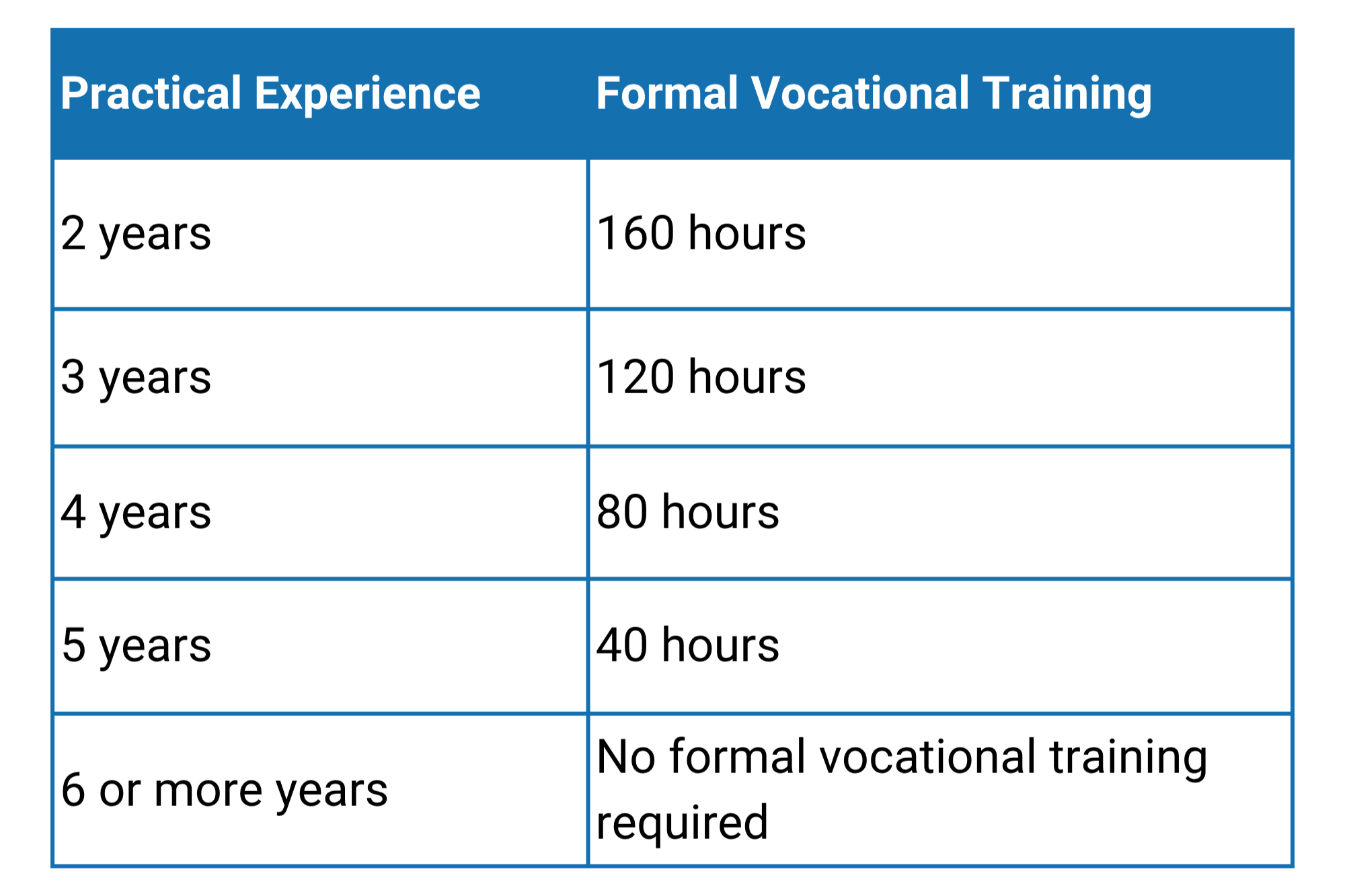
Virginia Residential Plumber experience and vocational training requirements.
What If I'm Already a Residential Plumber in Another State?
The Residential Tradesman application also includes a pathway for individuals who are currently licensed or certified as a Residential Tradesman by a governing body outside Virginia.
DPOR requires a Certification or Letter of Good Standing and a copy of the applicant's current Residential Tradesman license or certification.
If you hold an out-of-state credential, don't assume it automatically transfers to Virginia. Submit the documentation DPOR requires so the Board can review your qualification.
How to Apply for a Virginia Residential Plumber License
The basic process is:
Make sure you meet one of the Residential Plumber experience and education pathways.
Complete the Residential Tradesman Exam & License Application.
Include your required experience and education documentation.
Submit the application to the Virginia Board for Contractors.
Receive approval to take the Residential Plumber exam.
Pass the required exam and complete the licensing process.
Applicants must be at least 18 years old, and the current application also requires a copy of a government-issued ID.
Virginia Residential Tradesman Exam & License Application
Does a Residential Plumber Need a Contractor License?
Remember that the Residential Plumber license is an individual tradesman license. It does not replace a contractor business license.
The current Residential Tradesman application specifically states that an applicant performing work over $1,000 must contact the Board for Contractors to obtain a Virginia contractor license.
If you work for a licensed plumbing contractor, the contractor license belongs to the business.
If you're contracting directly with customers through your own business, you may also need a Class A, B, or C contractor license with the appropriate Plumbing classification, depending on the work you're performing.
Read Virginia Tradesman License vs. Contractor License: What's the Difference? for a simple explanation of how the two licenses work together.
Can a Residential Plumber Become a Journeyman Plumber?
Yes. One of the purposes of Virginia's new Residential Plumber license is to create an additional pathway toward Journeyman licensure. DPOR specifically describes the residential license as a potential step toward obtaining Journeyman status.
Under Virginia's current Journeyman qualification requirements, experience as a licensed Residential Plumber can be used toward qualifying for Journeyman licensure.
Residential Plumber vs. Journeyman Plumber
The biggest differences are scope and qualification requirements.
A Residential Plumber is limited to residential plumbing work and can qualify with less experience and vocational training.
A Journeyman Plumber has broader licensing privileges and higher initial qualification requirements.
So if your work is limited to residential plumbing and you don't yet qualify for Journeyman licensure, the Residential Plumber license may provide another path to becoming licensed.
If you already qualify for Journeyman licensure, it may make more sense to pursue the Journeyman license rather than limiting yourself to residential work.
Frequently Asked Questions
Is the Virginia Residential Plumber license new?
Yes. Virginia's Residential Plumbing license became available April 1, 2025, along with the Residential HVAC Mechanic license.
Can a Virginia Residential Plumber perform commercial plumbing work?
No. DPOR specifically states that commercial work is not permitted under the Residential Plumbing license.
Do I need vocational training to become a Residential Plumber?
Not necessarily. Virginia provides several experience-and-education combinations, including a pathway for applicants with six or more years of practical experience and no formal vocational training.
Do I need plumbing experience?
Yes. Every qualification pathway listed on the current Residential Tradesman application requires practical experience in the trade.
Can I eventually upgrade from Residential Plumber to Journeyman?
The Residential Plumber license can be used as a pathway toward Journeyman status. However, these are separate license levels with their own qualification requirements rather than an automatic upgrade.
Is a Residential Plumber license the same as a Class C Plumbing contractor license?
No. The Residential Plumber license is an individual tradesman license. A Class C Plumbing contractor license is a business contractor license.
A plumber operating a contracting business may need to deal with both individual and business licensing requirements.